Multi-scale modeling of human tissues from spatial transcriptomics with TERRA
bioRxiv2026Preprint
A foundation model pretrained on 112 million human cells that represents genes, cells and their spatial neighbourhoods from a single set of weights.
🧬 AI × Bio | Machine Learning Scientist & Engineer
Principal Research Scientist · Wellcome Sanger Institute (from October 2026)
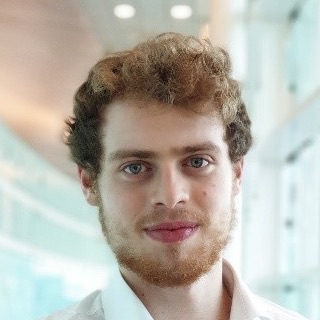
I build machine learning systems for spatial biology: the models, and the infrastructure that makes them usable.
Two of them are NicheCompass, published in Nature Genetics, and TERRA. I led both, and both are open source.
My background is half research, half engineering: a doctorate at Helmholtz Munich and the Technical University of Munich, and seven years in data science consulting, the last five building production ML platforms on Azure and Databricks for pharma, part-time once the PhD began. I still consult. I care about work that survives contact with real data and real users.
Always happy to hear from people working at the intersection of AI and biology.
Currently
Agentic multimodal models that decode human biology, learning across histology, spatial and single-cell omics, clinical data and knowledge graphs, with applications in drug discovery, diagnostics and prognostics.
Tissues are organised into niches: local communities of cells that coordinate a shared function. NicheCompass finds those niches in spatial omics data and quantifies what holds each one together, scoring every cell for the signalling pathways it sends into and receives from its neighbourhood. It works across samples, donors and sequencing platforms, and has been run on a whole mouse brain atlas of 8.4 million cells.
First author and lead developer
Tissue works through recurring neighbourhoods of cells, and TERRA learns to represent them. Pretrained on 112 million human cells, it describes a cell, the genes it expresses and the niche around it from a single set of weights, applied zero-shot to tissue it has never seen, and predicts how that niche shifts when a gene is knocked out.
First author and lead developer
A cell’s gene expression reflects both what the cell is and where it sits. MintFlow separates the two in spatial transcriptomics data, then predicts how expression would change if the surrounding cells were deleted or replaced.
Co-first author
bioRxiv2026Preprint
A foundation model pretrained on 112 million human cells that represents genes, cells and their spatial neighbourhoods from a single set of weights.
bioRxiv2025Preprint
Separates the gene expression a cell owes to its microenvironment from the expression intrinsic to it, so that a microenvironment can be perturbed in silico rather than only described.
Nature Genetics 57(4), 897–9092025Journal
A graph deep-learning method that identifies cell niches in spatial omics data and quantifies the communication pathways that define them.